10 Signs of Autoimmune Disease & How to Reverse Your Symptoms
Nov 03, 2026
If conventional medicine has brushed off your exhaustion, joint pain, or brain fog because your labs look “fine,” you are not imagining this. Signs of autoimmune disease are often vague, they come and go, and they can overlap with many other issues. That is why so many people wait years for answers. (1,2)
Autoimmune disease happens when your immune system attacks your own tissues instead of defending you. Scientists know about more than 80 autoimmune diseases, including Hashimoto’s, rheumatoid arthritis, lupus, and type 1 diabetes. Genetics matter, and so do environmental triggers such as infections, chemicals, and diet. (1,3)
Table of Contents
- 10 Signs of Autoimmune Disease
- How to Reverse Your Symptoms with The Myers Way
- FAQs
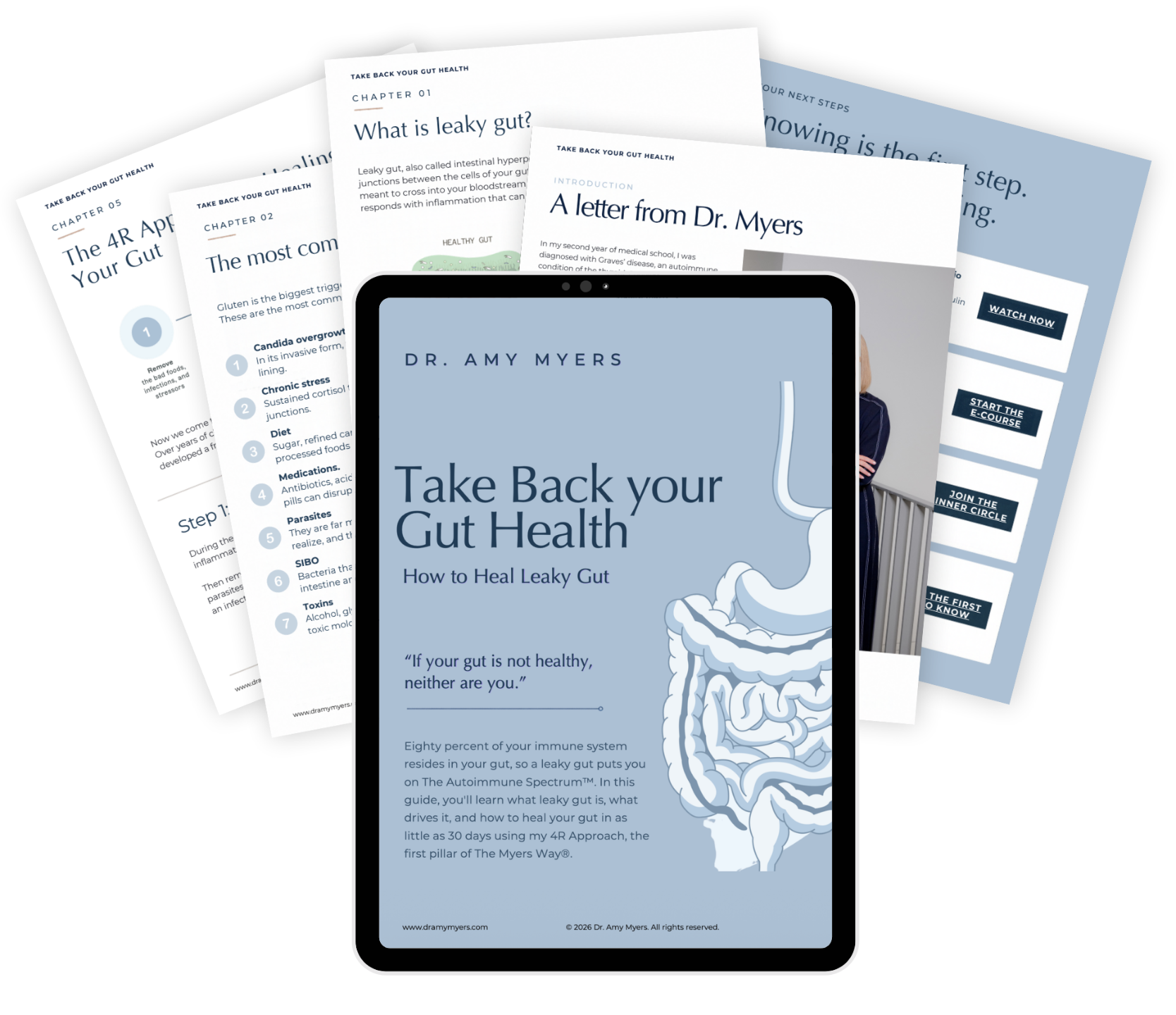
If you have been chasing symptoms that never quite resolve, the answer is often one level deeper than the symptom itself. I come back to two lines because they are true in practice: “The gut is the gateway to health.” Then I add, “If your gut is not healthy, neither are you.” Your gut is the foundation of your whole body’s health because 80% of your immune system resides there. Without a healthy gut, you can’t have a healthy immune system. When your gut lining is compromised, your immune system cannot function the way it was designed to. A leaky gut places you on The Autoimmune Spectrum™, and that is why Pillar I: Heal Your Gut comes first in The Myers Way®.
These 10 signs do not diagnose you. They tell you it is time to look at inflammation, your gut, and where you sit on the spectrum, then work with a qualified practitioner.
10 Signs of Autoimmune Disease
Symptoms of autoimmune disease depend on which tissues are involved. Many conditions cause inflammation: warmth, swelling, discoloration, and pain. Symptoms can flare, then ease. (2)
These are the signs and symptoms of autoimmune disease I want you to know:
- Persistent fatigue that rest does not fix
- Joint pain, stiffness, or swelling
- Muscle aches or weakness
- Brain fog or poor memory
- Digestive changes such as bloating, constipation, or diarrhea
- Skin concerns, including rashes, hives, or eczema-type itching
- Hair thinning or hair loss
- Feeling cold, sluggish, or noticing thyroid-related changes
- Recurring infections or feeling run-down
- Mood changes, anxiety, or low mood that travel with physical symptoms
Itchy skin can be associated with autoimmune activity. Eczema is usually classified as a chronic inflammatory skin condition, not a classic autoimmune disease. Hives can have many causes, including immune activity. None of these signs, on their own, mean you have an autoimmune disease. Track what you notice, share your family history, and get evaluated. (2,4)
Women are more likely to have autoimmune conditions, and having one can raise the odds of another. Trust what you feel in your body. If symptoms are new, severe, or keep returning, see a qualified healthcare professional. (2)
The Autoimmune Spectrum™ has four levels:
- Level 1, Very mild (score 0–5)
- Level 2, Moderate risk (score 6–39)
- Level 3, Severe risk (score 40–79)
- Level 4, Autoimmune (score 80+)
Where you land changes how aggressively we support your gut and immune system. It does not replace a medical diagnosis.
How to Reverse Your Symptoms with The Myers Way
The Myers Way® 30-day Protocol moves you back down the spectrum, and it is built on the Four Pillars, in this order.
Pillar I: Heal Your Gut. The gut is the gateway to health. Use the 4R Approach: remove inflammatory foods and infections, restore digestion with complete digestive enzymes, reinoculate with a high-quality probiotic and then balance with beneficial immunoglobulins in ImmuneIG, and repair with the slippery elm, marshmallow root, and aloe vera in Leaky Gut Revive®.
Pillar II: Get Rid of Gluten, Grains, and Legumes. A strict gluten-free diet requires reading every label, since gluten hides in sauces, seasonings, and processed foods. (5)
Pillar III: Tame the Toxins. Prevent toxins from coming in: breathe cleaner air with a HEPA filter, eat organic food, drink filtered water, and use clean beauty and cleaning products. Then focus on getting them out. Your body clears toxins through urine, stool, and sweat, so all three need to be working every day.
Pillar IV: Heal Your Infections, Relieve Your Stress, and Let Go of Trauma. Latent viruses reactivate under stress, and unprocessed trauma keeps your nervous system in survival mode.
Underneath every protocol sit the Essential 4 Supplements, for everyone 1 to 101 years old, always in this order: The Myers Way Multivitamin; Complete Omega-3; Probiotic 100 Billion; Vitamin D with Vitamin K2. They support nutrient status, a healthy inflammatory response, a healthy gut microbiome, and immune function.
You can start with my Autoimmune Support resources to see how these pieces fit together. Not sure where you land on the spectrum? Take the quiz to find your level, then follow the protocol from there.
Diet and supplements support your gut and immune system. They do not diagnose, reverse, or replace care for an autoimmune disease.
This is a way of life, not an 80/20 diet. You are worth the commitment. Stay with the pillars, and you give your immune system a chance to stand down.
If symptoms are severe, sudden, or worsening, seek medical care. Do not start, stop, or change prescription medicines, including supplemental thyroid hormone, without your practitioner.
FAQs
- What are the symptoms of autoimmune disease?
Symptoms depend on which tissues your immune system is targeting. Common clues include fatigue, joint pain or stiffness, muscle aches, brain fog, digestive changes, rashes, hair thinning, and flares that come and go. (2) Inflammation often shows up as warmth, swelling, discoloration, and pain. These symptoms overlap with many other conditions, so they are a reason to get evaluated, not a diagnosis. - Are hives a symptom of an autoimmune disease?
They can be, and they often are not. Hives are itchy welts that can follow allergy, infection, thyroid issues, or no clear trigger. Some autoimmune conditions involve the skin, yet hives alone do not mean you have autoimmunity. (2) If hives last more than a few weeks, keep returning, or come with swelling of your lips or throat, see a qualified healthcare professional promptly. - Is eczema an autoimmune disease?
Eczema, including atopic dermatitis, is usually described as a chronic inflammatory skin condition driven by barrier dysfunction and immune activity. It is not typically classified as a classic autoimmune disease the way Hashimoto’s or rheumatoid arthritis is. (4) Eczema-type itching can still show up alongside autoimmunity. Take it as a clue to look at your gut, inflammation, and skin barrier, not as proof of a diagnosis. - Is itchy skin a symptom of autoimmune disease?
Itchy skin can be associated with autoimmune activity, and it can also come from dryness, allergy, eczema, or hives. (2,4) Itching is worth a closer look when it travels with fatigue, joint pain, digestive changes, or rashes that flare. Track the pattern and get evaluated rather than assuming the itch is autoimmunity. - How do you reverse autoimmune symptoms?
I start with The Myers Way: heal your gut with the 4Rs, get rid of gluten, grains, and legumes, tame toxins, then address infections, stress, and trauma. The Essential 4 Supplements sit underneath that work. This approach supports your gut and immune system so symptoms can settle. It does not replace diagnosis, prescription care, or your practitioner, and it is not a promise that every person will have the same outcome.
References
- National Institute of Environmental Health Sciences. “Autoimmune Diseases.” NIEHS, last reviewed March 6, 2026. www.niehs.nih.gov/health/topics/conditions/autoimmune. Accessed on September 14, 2026.
- Cleveland Clinic. “Autoimmune Diseases.” Cleveland Clinic, last updated October 22, 2024. my.clevelandclinic.org/health/diseases/21624-autoimmune-diseases. Accessed on September 14, 2026.
- Vojdani, Aristo, K. Michael Pollard, and Andrew W. Campbell. “Environmental Triggers and Autoimmunity.” Autoimmune Diseases, 2014. pmc.ncbi.nlm.nih.gov/articles/PMC4290643. Accessed on September 14, 2026.
- National Institute of Arthritis and Musculoskeletal and Skin Diseases. “Atopic Dermatitis.” NIAMS. www.niams.nih.gov/health-topics/atopic-dermatitis. Accessed on September 14, 2026.
- Mayo Clinic. “Gluten-free diet.” Mayo Clinic. www.mayoclinic.org/healthy-lifestyle/nutrition-and-healthy-eating/in-depth/gluten-free-diet/art-20048530. Accessed on September 24, 2026.